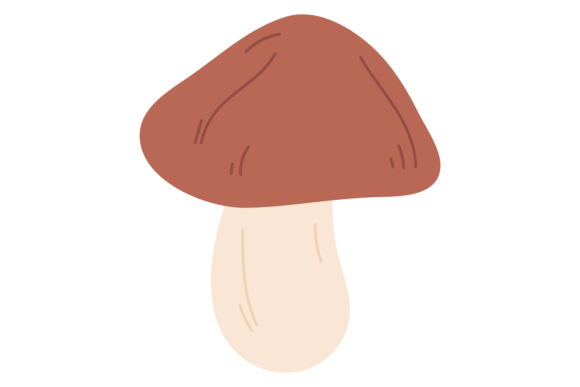
Discover the Organic Allure of Mushroom Icon: Forest Wild Fungus Color
When you’re building a brand or designing a campaign, the visuals you choose tell a story before a single word is read. You want something that feels authentic, grounded, and memorable. That’s precisely where a unique asset like the Mushroom Icon: Forest Wild Fungus Color collection comes in. This isn't just another set of generic symbols; it's a versatile design toolkit that brings the intricate, organic beauty of the forest floor directly into your digital and print projects. Whether you're a designer crafting a new identity or a small business owner building your website, understanding how to use this asset effectively can elevate your work from simple to stunning.
Aesthetic Appeal and Visual Character
The core strength of the Mushroom Icon set lies in its authentic, nature-inspired personality. These aren't simplified, corporate-style vector shapes. Instead, they capture the wild, textured essence of real fungi—the subtle color gradients, the delicate gills, the organic asymmetry. The "Forest Wild Fungus Color" palette is a particular standout, offering rich, earthy tones: deep umbers, mossy greens, warm ochres, and the soft cream of a mushroom cap. This color story immediately evokes a sense of calm, naturalism, and handcrafted quality.
The style walks a brilliant line between illustrative detail and scalable clarity. Because the assets are provided in formats like transparent PNG, SVG, and EPS, they retain their crispness whether you're scaling them for a large-format banner or shrinking them for a social media icon. This makes them a genuinely premium font alternative for iconography—offering the visual richness of illustration with the practicality of a scalable vector symbol.
Where This Asset Truly Shines: Practical Applications
Thinking beyond a simple website favicon, the applications for this creative font of icons are surprisingly broad. Its natural, artisanal feel makes it a perfect fit for specific industries and project types.
- Branding & Logo Design: For businesses in organic food, sustainable goods, wellness, herbalism, or outdoor adventure, these icons can become a cornerstone of a brand identity. Imagine a single, detailed mushroom icon used as a standalone logo mark or integrated into a wordmark. It instantly communicates values of growth, nature, and authenticity.
- Editorial & Packaging Design: In editorial design, these icons are perfect for breaking up text in magazines, blogs, or cookbooks focused on foraging, botany, or slow living. For packaging design, they add a layer of artisanal charm to products like craft coffee, specialty teas, or handmade soaps.
- Digital & Web Design: In web design, use them as decorative elements, bullet points, or section dividers to create a cohesive visual theme. They work beautifully for social media graphics, adding a unique touch to Instagram posts, Pinterest pins, or Facebook covers that stands out in a crowded feed.
- Personal & Craft Projects: For hobbyists and crafters, the transparent PNG files are ideal for digital scrapbooking, custom stationery, or print-on-demand products like stickers, mugs, and t-shirts. The isolated white background versions make them easy to incorporate into any layout.
Integrating the Icon: From Pairing to Perception
Successfully using a distinct visual element like the Mushroom Icon requires thoughtful integration. It’s not just about placing it on a page; it’s about making it part of a larger conversation.
Building Visual Hierarchy and Consistency
An icon of this quality can do more than decorate—it can direct. Use a larger, centrally placed mushroom to draw the eye to a key piece of information or a call-to-action. Smaller instances can create a subtle, repeating motif that builds brand recognition and consistency across all touchpoints, from your website header to your email newsletter signature. This consistency is what transforms a collection of nice visuals into a professional and memorable brand identity.
Pairing for Readability and Balance
The detailed, organic nature of the icon means it pairs best with typefaces that offer contrast. A clean, modern sans serif font for body text provides excellent readability and lets the icon’s details stand out without competition. For headlines, you could pair it with a sturdy serif font to evoke a classic, trustworthy feel, or even a simple script font for a touch of elegance—just ensure the script remains legible at smaller sizes. The goal is a balanced font pairing where the icon and the typography complement each other, creating a clear visual hierarchy.
Making the Smart Choice: A Practical Guide
Before you download and start designing, a few practical considerations will ensure the asset works perfectly for your needs.
- Evaluate the Project Fit: Does your project’s theme align with nature, growth, or artisanal craft? If you’re designing for a tech startup or a law firm, this might not be the right fit. But for the right niche, it’s a powerful differentiator.
- Test the Formats: The inclusion of EPS and SVG files is crucial for scalability. Use these for print work and large digital displays. The transparent PNGs are your go-to for web, social media, and any project where you need to place the icon over a colored background or image without a white box.
- Understand the Licensing: As a commercial font and design asset, always review the license. Ensure it covers your intended use, whether for a single client project, unlimited commercial products, or personal use. This step is non-negotiable for professional work.
- Look for Cohesion: Does the set offer variations? A good collection might include icons at different angles, in different growth stages, or with subtle color shifts. This variety allows you to use the asset system throughout a project without repetition.
In a digital landscape saturated with generic visuals, the Mushroom Icon: Forest Wild Fungus Color set offers a breath of fresh, forest air. It provides designers and creators with a tool that is both visually captivating and highly functional, enabling the creation of work that feels genuine, thoughtful, and deeply connected to the natural world. By considering its aesthetic strengths, matching it to the right projects, and integrating it with care, you can leverage this asset to build stronger, more engaging visual stories.